- News article
The health industry meets policymakers: calling for clearer direction and smarter financial instruments

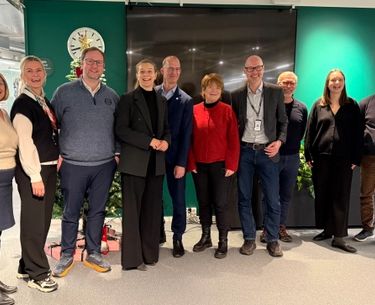
How can Norway bring new technologies, treatments and medicines to market – and to patients – faster? That was the central question when representatives from the Standing Committee on Health and Care Services in the Norwegian Parliament met actors from the health industry for a tour and roundtable discussion at Oslo Science Park. The meeting was hosted by Norway Health Tech, Oslo Cancer Cluster and The Life Science Cluster. The politicians visited three companies – Artbio, Sensio and Authera – before continuing the discussion with experts from hospitals and municipalities.


Written by
Therese Oppegaard
A connected healthcare system requires connected thinking
The conversation opened with a clear situational overview from Oslo University Hospital, describing how dementia and cancer survivorship are now the fastest-growing patient groups. Dementia in particular places increasing pressure on services. -If municipalities fail, we get a flood in the emergency department, said Christian Skattum, Head of Innovation at OUS. He emphasised that these challenges cannot be solved in silos: -Actions in one part of the value chain have major effects across the whole system. We need to think in terms of total economy.
Lillestrøm municipality followed up by describing the gap between ambitions for more research and innovation in municipal health services and the actual capacity they have today. -If we are to improve at research, we must be part of the process – not just be researched on, said Bjørg Torill Madsen, Director of Health and Coping. She also pointed out that today’s support schemes do not match the needs: -The instruments available to us are too small to create full effect. We need funding that enables larger, long-term efforts.
Companies around the table shared a unified message: Norway has world-leading competence, but structural barriers slow progress. Artbio noted that there is currently no domestic production capacity for radiopharmaceuticals, making it difficult for early-stage companies to produce and test new medicines in Norway. Sensio shared that two SFI (Senter for Forskningsdrevet Innovasjon) applications related to dementia had been rejected – and that the theme is often not considered “attractive enough” to succeed in major research calls. Authera highlighted that even with strong research investments, the road to commercialisation is too steep: “We need to ensure that research actually leads to value creation.” Norwegian start-ups from research communities face extensive IP negotiations even before a company is even formally established, and small firms are often evaluated on par with large industrial players when applying for public funding. Ketil Widerberg from Oslo Cancer Cluster warned that Norway is also falling behind in artificial intelligence: -We are losing ground in AI, and Norway risks becoming a pure purchaser. He called for targeted instruments that help companies access international markets.

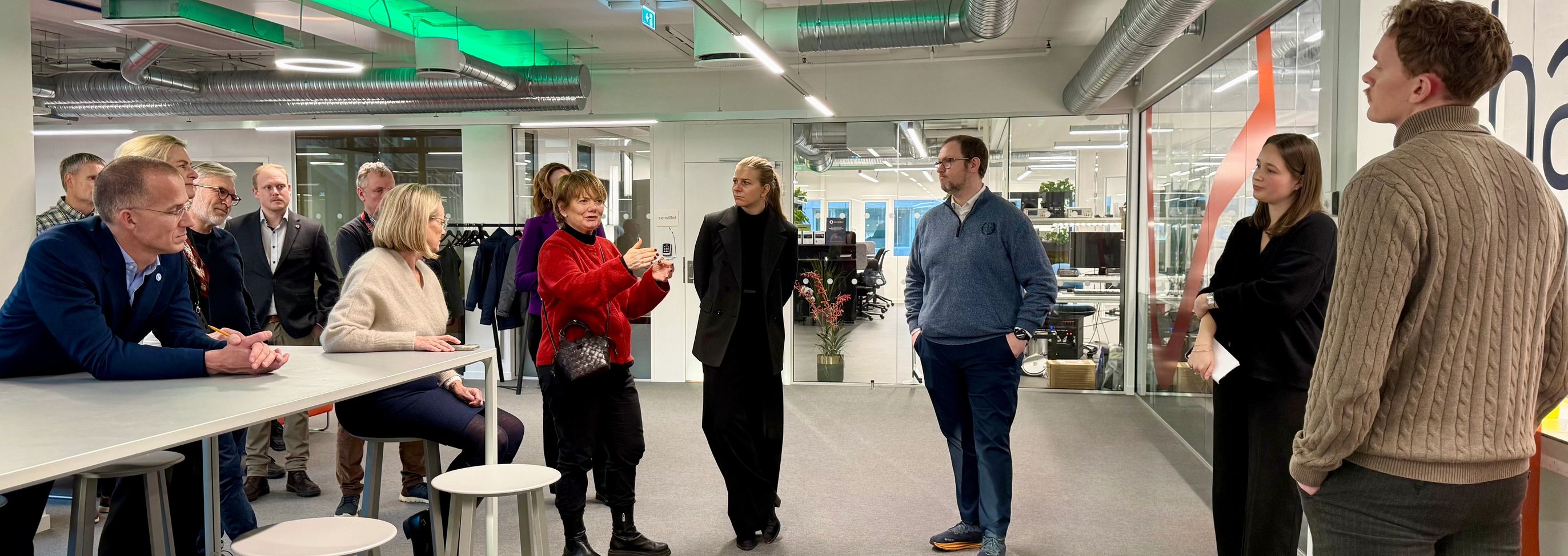
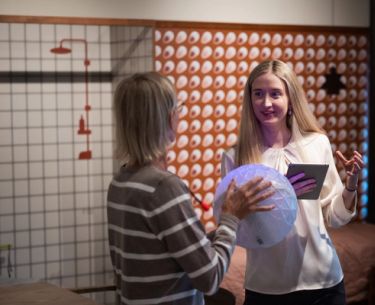
There were good discussions throughout the company visits — here at Authera’s lab in ShareLab.
From individual projects to system-level change
The politicians asked participants for concrete proposals: What will it take to build a strong Norwegian health industry? The discussion highlighted the need for better incentives for commercialisation, more precise funding instruments for early-stage companies, and stronger international networks for small and scaling firms. Many also pointed to the need for closer collaboration between municipalities, hospitals, academia and industry to ensure that innovations reach patients faster.
KrF representative Ida Lindtveit Røse stressed that technology only works when the organisation around it is prepared to adopt it. -We depend on technology that saves staff time – not technology that creates new burdens, she said. -At the same time, we are too weak on change management, and that’s why we fail to realise the benefits of new solutions.

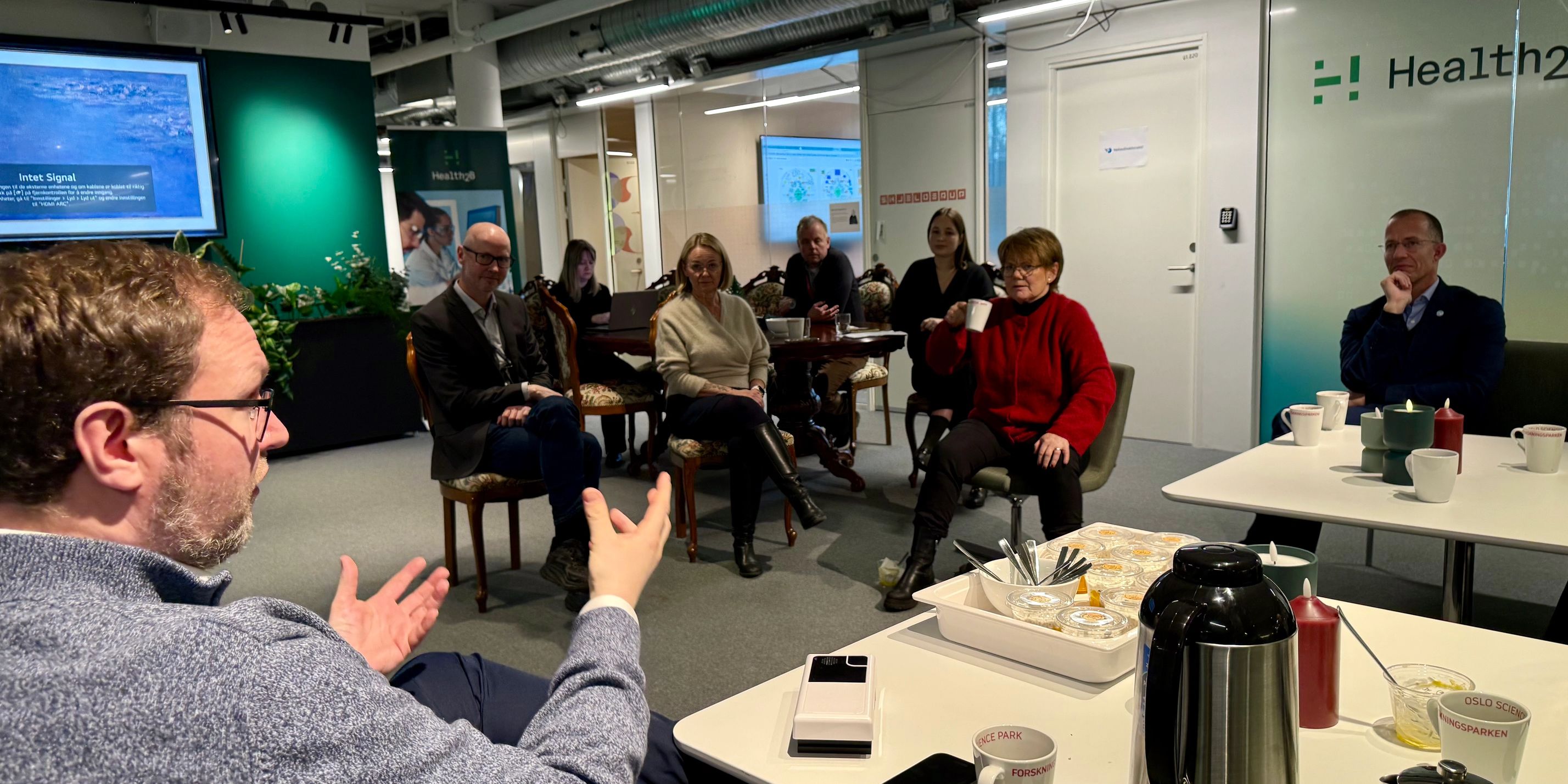
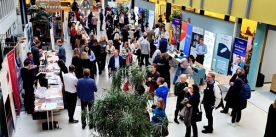
Roundtable in Health2B following the company presentations.
By the end of the meeting, there was broad agreement that the challenge is not isolated projects, but structures. Companies described how promising innovations stall long before reaching patients – due to limited infrastructure for testing and production, demanding IP processes and fragmented support for early development. Participants called for a clearer national direction and policy instruments that lower the threshold for public and private adoption and accelerate the pace of implementation.
The cluster leaders closed by emphasising that close dialogue between policymakers and the health industry is essential for moving the sector forward – and that they stand ready to continue the collaboration. These meeting arenas play a crucial role in surfacing practical solutions to the challenges facing both the healthcare system and the companies developing tomorrow’s health innovations.
Participants from the political parties
Labour Party (AP)
• Ragnhild Bergheim, Member of Parliament, Standing Committee on Health and Care Services
Conservative Party (H)
• Erlend Svardal, Member of Parliament, First Deputy Chair, Standing Committee on Health and Care Services
Progress Party (FrP)
• Hildegunn Hansen, Political Advisor, Health Faction
Christian Democratic Party (KrF)
• Ida Lindtveit Røse, Member of Parliament, Standing Committee on Health and Care Services
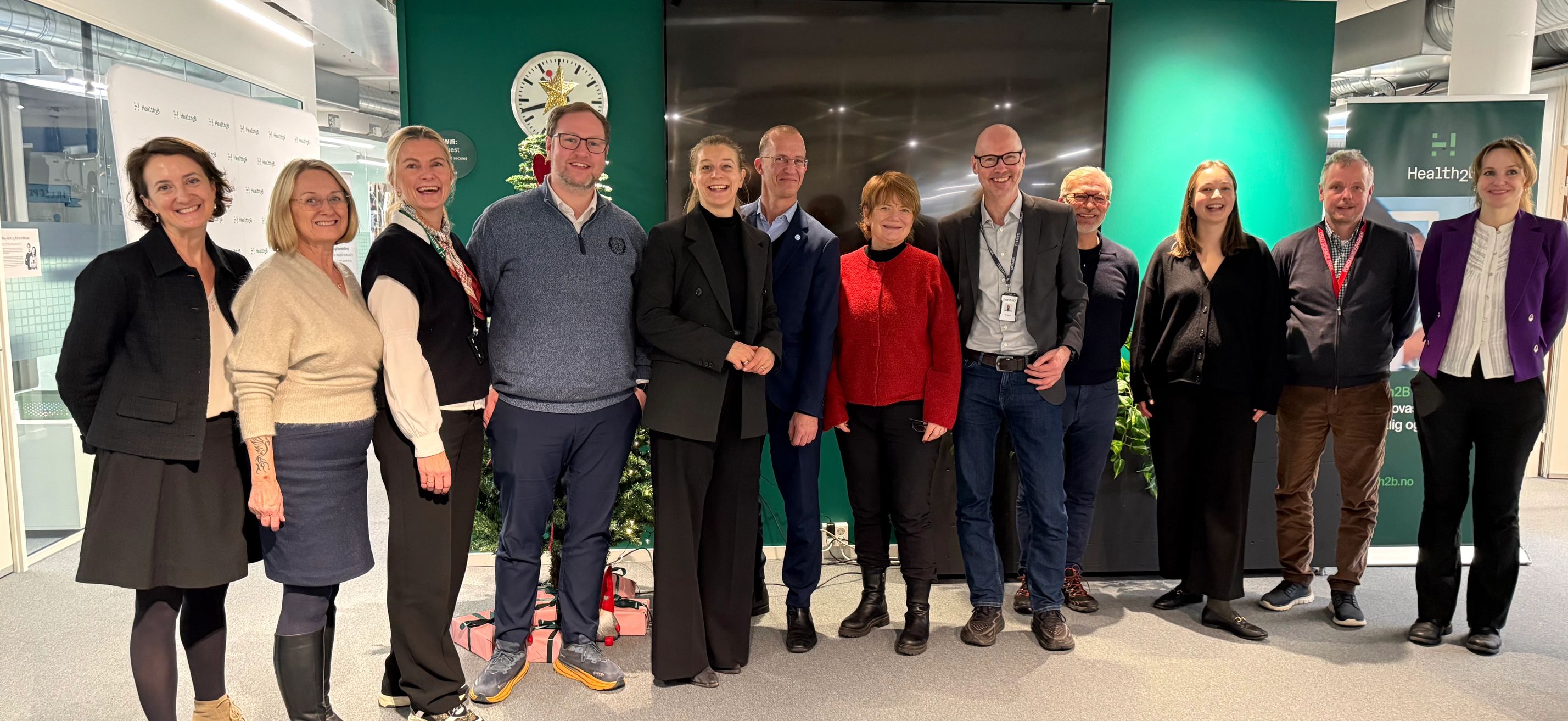
📸Wenche Gerhardsen, Oslo Cancer Cluster