- Success story
Public–private collaboration develops AI tool for more efficient clinical documentation

How can artificial intelligence make everyday work easier for clinicians – while at the same time freeing up more time for patients? This is the backdrop for a pilot collaboration between Vidd Medical and Akershus University Hospital, where two district psychiatric centres are testing automated clinical documentation based on speech-to-summary technology in a six-month pilot.


Written by
Therese Oppegaard
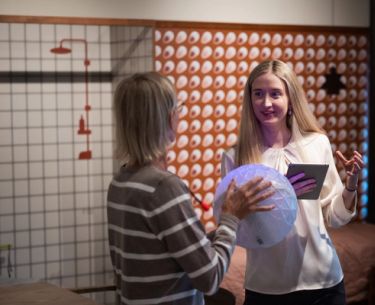
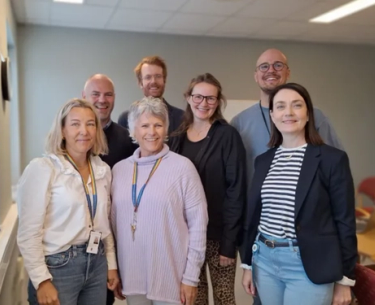
📸 The team at Ahus is pleased to be testing Vidd’s solution at outpatient clinics and district psychiatric centres (DPS) within the Division of Mental Health and Substance Abuse. Photo: Ahus
Akershus University Hospital (Ahus) is one of Norway’s largest hospital trusts, with responsibility for specialist healthcare services including mental health and substance abuse treatment. At DPS Groruddalen and DPS Follo, clinical teams had over time experienced a significant documentation burden. After patient consultations lasting 45 minutes – and up to 90 minutes for more extensive assessments – substantial parts of the working day are spent on documentation. To explore new and more efficient ways of working, the Division of Mental Health and Substance Abuse entered into an ongoing service agreement with Vidd Medical for speech-to-note technology.
Vidd Medical was established in 2023 by physicians Harald Fagerheim Bugge (nuclear medicine specialist) and Bjørnar Antonsen (psychiatrist, PhD), together with engineer and PhD in artificial intelligence Anders Taskén. The company has developed a solution that can be operated locally without internet access, adapted to strict requirements for information security and data protection in the healthcare sector – including mental health services.
The pilot collaboration takes place at a time when artificial intelligence is highlighted as one of the key tools for relieving pressure on healthcare professionals. Speech-to-summary technology in particular is seen as having strong potential for further scaling, and the aim of the project is to examine how the solution can be implemented in a safe and professionally sound manner in clinical practice. With Vidd Medical’s solution, the conversation between patient and clinician is transcribed in real time. Once the consultation is completed, a structured draft clinical note is generated within seconds. The clinician then reviews the text, quality-assures and edits it as needed before the note is entered into the electronic health record system.
– The technology is designed as a support tool for clinicians, not as a replacement for professional responsibility. The clinician adds the clinical assessment and always has the final say on what is documented, says Anders Taskén, co-founder of Vidd Medical.

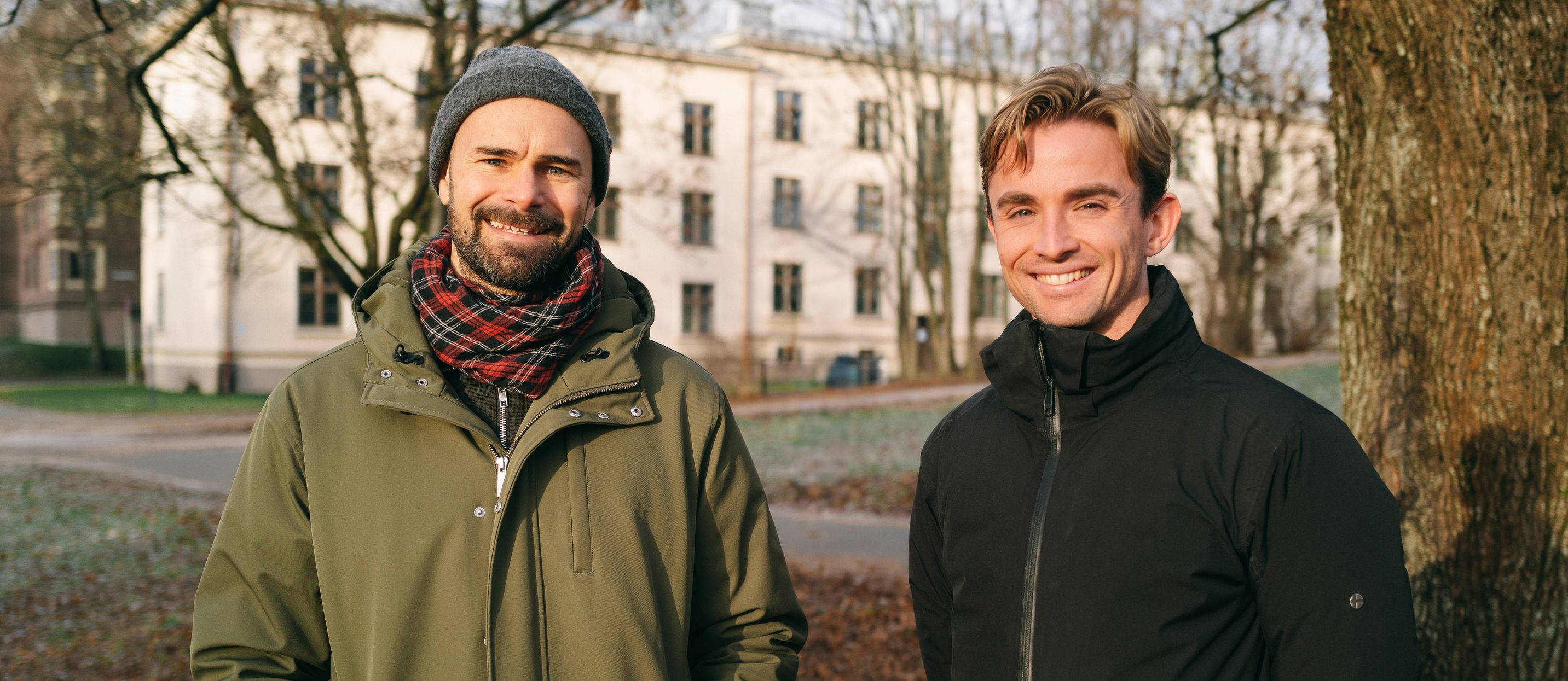
📸 Harald Fagerheim Bugge and Anders Taskén in Vidd Medical. Photo: Vidd Medical
Systematic collection of experience
The pilot collaboration between Vidd Medical and Ahus is organised as a quality improvement project with a focus on safe and stepwise implementation. Measurements are collected before launch and after approximately three and six months. Experience is gathered through a comprehensive survey that assesses, among other factors, stress and workload, time use and perceived time savings, how intuitive the solution is experienced to be, training needs, the quality of documentation, workday experience and job satisfaction, as well as the extent to which the transcription reflects the content of the consultation.
Preliminary evaluations show that after three months, most clinicians in the pilot report saving 30–60 minutes per day on documentation. Several describe that the tool makes it easier to stay up to date with ongoing note-taking, and that more time can be devoted to clinical assessments and planning of patient follow-up. The most important feedback, however, is that the vast majority report a positive impact on their working day, with reduced stress and lower workload related to documentation after the pilot was introduced.
The quality of documentation is also highlighted. The notes have a consistent and structured format, which many describe as a strength—particularly for more comprehensive documents such as initial consultations or admission notes. At the same time, it is noted that the solution in some cases requires more editing than expected, and that technical issues have posed challenges. This underlines that the technology is still evolving, and that stability and close follow-up are essential to realising its full potential—and to providing clinicians with reliable support in their daily work.
From a patient perspective, early experience also shows that almost all patients consent to the use of the solution. Several patients report a positive change in their interaction with clinicians, describing that the clinician appears more present after the tool was introduced.
For Vidd, it has been crucial to develop the solution in close dialogue with clinicians. For the hospital, the pilot is about both testing benefits and identifying challenges, while ensuring that implementation takes place within the framework of current requirements for information security and data protection.
– For us, this is a highly exciting innovation project that demonstrates what can be achieved when the public and private sectors collaborate closely. It has been important to develop and test the solution within our clinical departments so that the technology can be tailored to clinical needs—and thereby contribute to more sustainable healthcare services, says Gro Helen Øiestad Nordberg, project lead at Ahus.
Close collaboration between supplier and clinic
The collaboration between Ahus and Vidd Medical demonstrates that speech-to-note technology can be integrated into clinical workflows within mental health services and deliver measurable benefits in the form of time savings and improved job satisfaction. At the same time, the pilot provides a solid foundation for further development and responsible implementation.
Experience shows that the introduction has required extensive and systematic development and implementation efforts. For the solution to function well in practice, it has been necessary to carry out thorough development and adaptation of templates and clinical note structures to ensure they support clinical workflows and are professionally relevant for different clinicians. This work has been crucial to the overall value of the solution, while also highlighting areas with continued potential for improvement—both in terms of language, structure and precision across different clinical situations.
Read more about Vidd Medical here.