- Success story
How do you build an occupational health tool employees actually use?

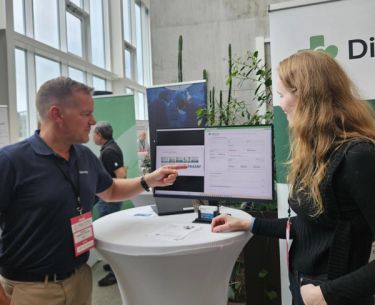
Digicura is developing a digital tool to strengthen mental health and resilience in the workplace. Through the Norway Health Tech Lab, the company tested the solution with real users and gained insights that are now shaping the next phase of development.


Written by
Therese Oppegaard
Many employees in both the public and private sectors face high workloads, emotionally demanding situations and limited time for reflection. At the same time, support is often only made available when strain has already developed into clear symptoms or sickness absence. Figures from the Norwegian National Institute of Occupational Health (STAMI) show that 39 per cent of Norway’s working population report mental health challenges, and that nearly one in five believe these challenges are work-related.
This is a challenge that Håvard Hogstad-Erikstein knows well from his own professional experience. After many years in both public and private healthcare, he saw how people often received support only after the pressure had already become overwhelming.
– Personally, I also experienced how the pressure within healthcare could affect both mental and physical health. It made me focus on how support can be offered earlier, in a way that feels natural, practical and accessible in everyday life, says Hogstad-Erikstein.
That became the starting point for Digicura. Together with an experienced CTO and a specialist psychologist, Hogstad-Erikstein developed XploreU Worklife, a digital occupational health tool designed to help employees build psychological flexibility: the ability to cope with difficult thoughts and emotions while continuing to act in line with what matters most, both at work and in their personal lives. The tool is based on an evidence-based approach that recent studies have linked to lower sickness absence and improved employee wellbeing in workplaces where it has been adopted. The solution combines brief explanations, guided reflection and practical exercises, making research-based coping tools available precisely when they are needed.

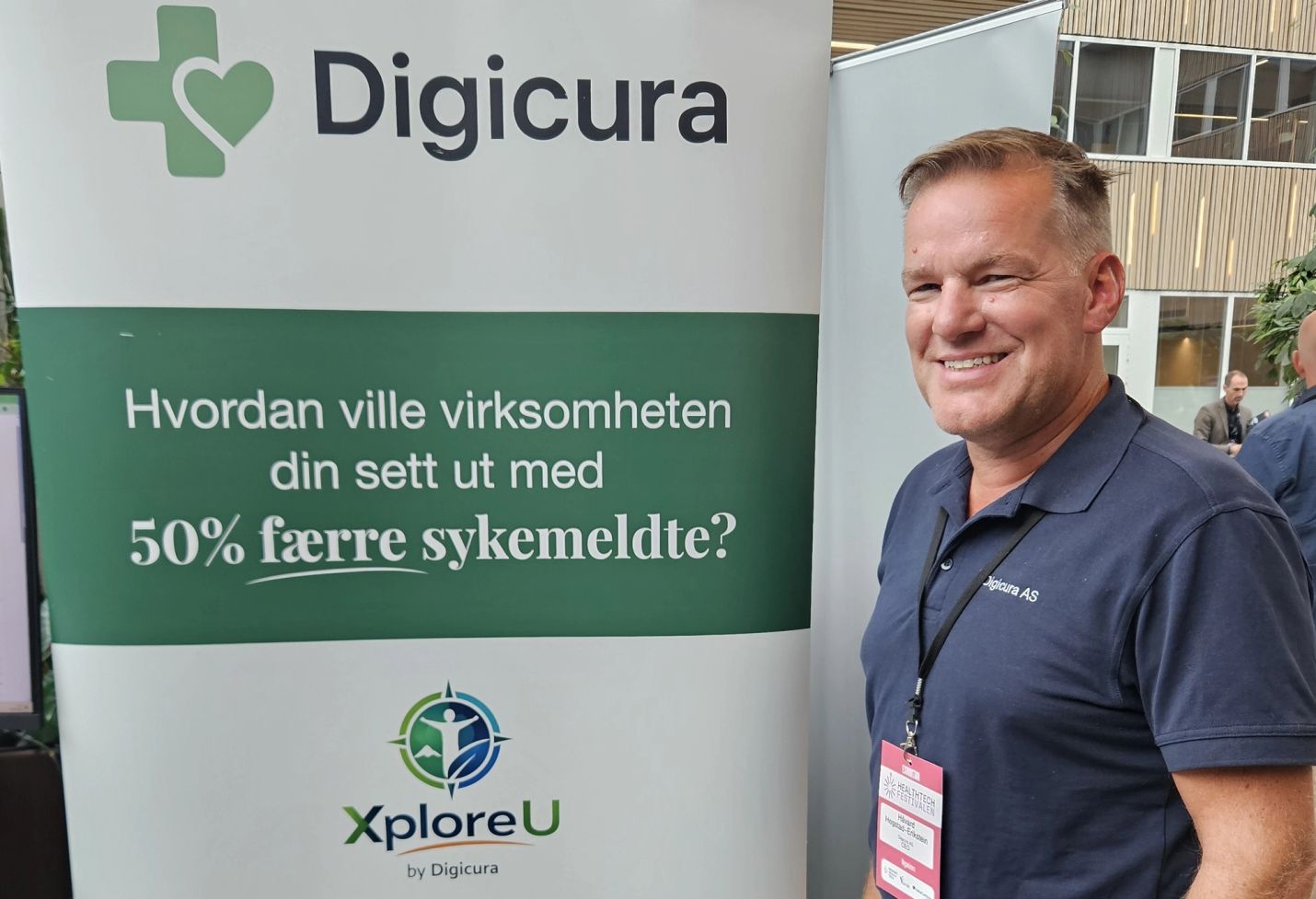
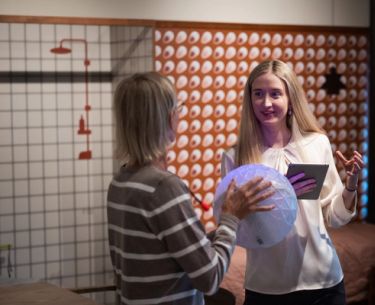
Håvard Hogstad-Erikstein founded Digicura after experiencing firsthand how work was affecting his health.
From assumptions to real user experiences
When Digicura developed an early version of its solution, the company needed an answer to a critical question: would employees actually use the tool in a busy working day?
– As a founder, it is easy to look for confirmation of your own assumptions. But what mattered most to us was getting honest feedback from real users, says the founder.
Through the Norway Health Tech Lab (NHT Lab), Digicura carried out a structured user test tailored to the company’s needs. Participants were recruited primarily from the public sector and used the solution both at work and at home over a four-week period. Throughout the test, NHT Lab conducted onboarding sessions, mid-term evaluations and a final workshop, before analysing the findings and compiling them into an independent report.
The City of Oslo contributed several employees from its Health Agency, whose teams work daily to develop, improve and implement digital solutions for citizens and healthcare professionals. They understand the value of involving end users early in the development process.
– It was both rewarding and educational to take part as end users in this user test and to share experiences that may contribute to better solutions in the future, says one of the agency’s managers following the project.
In projects like this, the cluster helps companies access insights that can be difficult to obtain on their own. As an independent third party, NHT Lab gathers user experiences and feedback in an objective and structured manner.
– The test provided Digicura with insights that both validated parts of the concept and challenged some of the assumptions the company brought into the project, says Karoline Blikra Mokleiv, head of NHT Lab.
– We work with a tailored methodology designed specifically for healthcare, and we have strong access to both end users and other key stakeholders.
Insights that reduce risk
The test showed that topics such as resilience, psychological flexibility and values-based work were perceived as both relevant and relatable by users. Several participants expressed an interest in continuing as pilot users after the testing period ended. At the same time, the test highlighted important factors that need to be addressed for the solution to succeed in practice. Usage frequency was lower than many had anticipated, partly because participants had demanding work schedules and because the technical solution was still at an early stage of development. The feedback also underscored the importance of management support, flexibility and low barriers to use in creating lasting engagement.
– Through NHT Lab, we gained access to a much stronger evidence base for decision-making than we could have achieved on our own, says Hogstad-Erikstein.
The founder emphasises that the most important outcome was not having the idea validated. What mattered most was understanding what it actually takes for employees to adopt and continue using the solution over time. The test provided a clear roadmap for the next phase of development.
– We received independent confirmation that the concept is relevant, as well as an honest assessment of what is required for the solution to be used in a busy working environment. That allows us to move into the next phase with greater precision and lower risk, concludes Hogstad-Erikstein.
For Digicura, the next step is to turn these insights into a more complete version of XploreU Worklife and carry out larger pilot projects. The independent report from NHT Lab not only provides direction for further development, but also offers a stronger foundation for future collaboration with customers and funding partners.
Curious about how NHT Lab can support your company? Visit our website to learn more.