- Success story
Ledidi secures contract for new UK national registry

Norwegian healthtech company Ledidi will play a key role in a new national NHS registry for robotic-assisted surgery in England. The contract follows several years of work in the UK market, which gained momentum after a Norway Health Tech delegation visit in 2022.


Written by
Therese Oppegaard
The Healthcare Quality Improvement Partnership (HQIP) commissions and oversees national clinical registries and audits across the NHS on behalf of NHS England. HQIP has commissioned the National Registry of Robotic Assisted Surgery (NRRAS), with a consortium led by the University of Leeds awarded £1 million to establish the registry. The consortium also includes the University of Warwick and Norwegian healthtech company Ledidi, which will provide Ledidi Registries, the technology platform that will run the registry.
The registry will collect data on the safety and effectiveness of robotic-assisted surgery, with the aim of capturing every NHS operation in England involving a surgical robot in orthopaedic and soft-tissue surgery. This makes the project an NHS contract, with Ledidi supplying the technology behind one of the NHS's national registry programmes.
Seven bidders competed for the contract
Ledidi took the initiative to form the consortium with the universities of Leeds and Warwick. According to Andreas Landsverk, VP Commercial at Ledidi, the aim was to combine the company’s technology and experience with strong clinical and academic expertise. The consortium competed against six other bidders in the open tender for the NRRAS contract.
– This gives us a key role in the delivery of an important national programme, with strong involvement and interest from authorities, surgical professional bodies, industry, patient organisations and more than 140 NHS hospitals, says Landsverk. Earlier this year, Ledidi also won a contract related to the national DAFNE diabetes registry, which, according to the company, collects data from 114 NHS hospitals.
– Ledidi is now recognised as a credible player in the UK, including for major national programmes such as NRRAS, says Landsverk.
– We have seen that projects like this also open doors to further research projects, clinical trials, registries and audits that can run on our other solutions, such as Ledidi Trials, he adds.
For the NHS, the new registry will provide a stronger evidence base for assessing robotic surgery. The National Institute for Health and Care Excellence (NICE) is the public body responsible for evaluating new health technologies and developing clinical guidelines for the NHS in England. NICE has previously identified gaps in the evidence on the use of robotic surgery in orthopaedic and soft-tissue procedures, and has so far issued only provisional recommendations while further evidence is gathered. The registry will track safety and outcomes, identify variations in care between hospitals, and cover all 11 types of surgical robots currently in use. The data collected will inform NICE’s future assessments and clinical guidelines, helping determine whether robotic-assisted surgery becomes an established surgical practice within the NHS rather than remaining under evaluation.
– High-quality data is essential if new surgical technology is to lead to better outcomes for patients, and if everyone across the NHS is to have equitable access to it. Ledidi is proud to help build a registry that will give clinicians and policymakers the evidence they need to guide the use of robotic surgery in the NHS over the long term, says Einar Martin Aandahl, CEO of Ledidi.

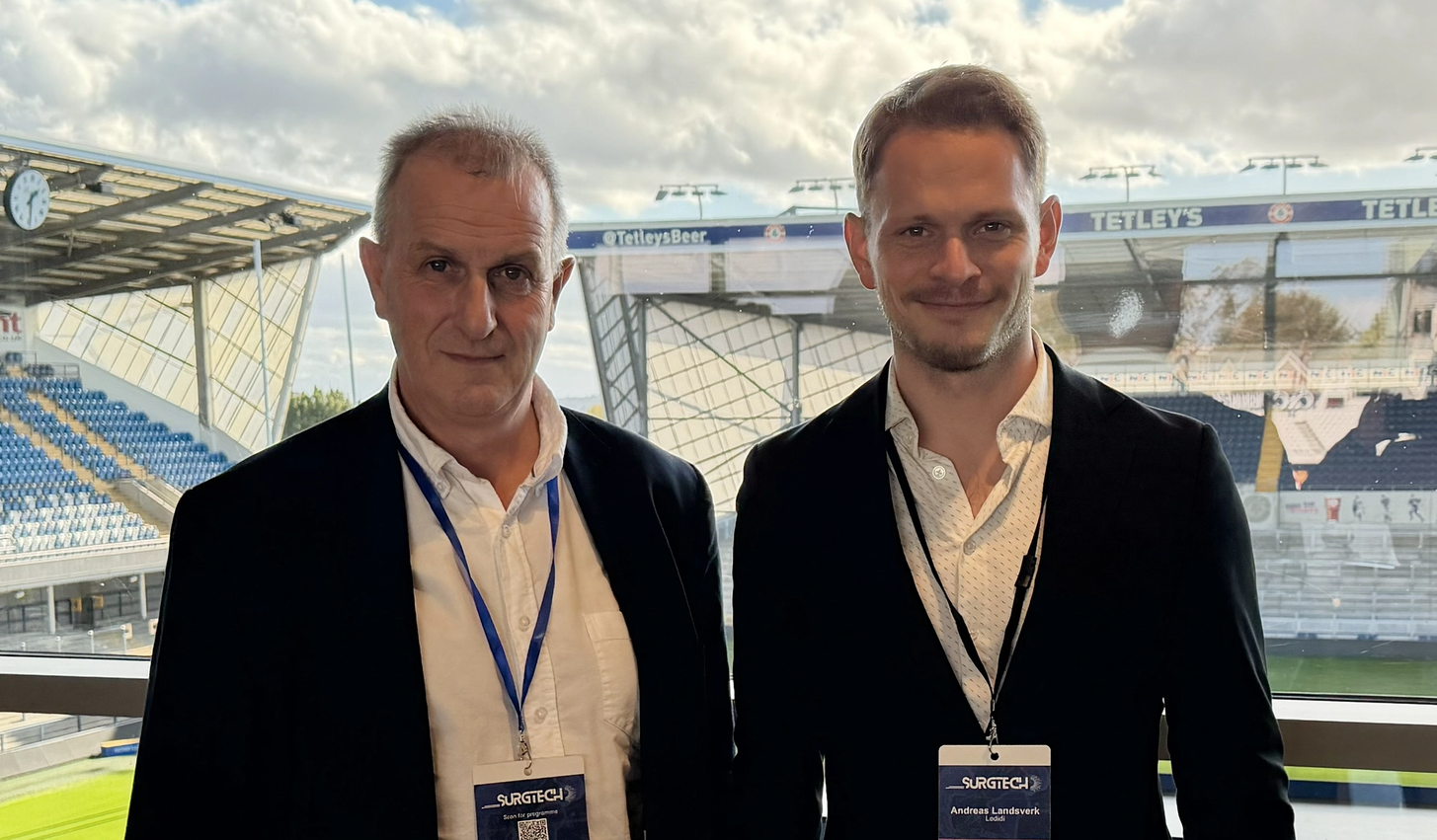
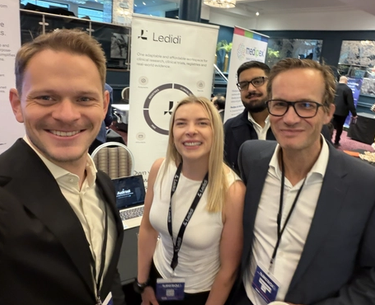
Professor David Jayne, Clinical Lead at University of Leeds, and Andreas Landsverk, VP Commercial i Ledidi. 📸 Andreas Landsverk
Building relationships since 2022
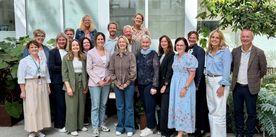
Ledidi has been working with the Leeds ecosystem for several years. An important entry point came four years ago, when Norway Health Tech organised a delegation visit to Leeds.
– We have been working with Leeds and the UK since 2022. Through the cluster, we were able to build close relationships with the Leeds ecosystem, which ultimately put us in a position to form the consortium when this opportunity arose, says Landsverk
Since then, the company has worked with several key experts in the Leeds ecosystem. Landsverk says companies looking to enter international healthcare markets need to take a long-term view, and points to Norway Health Tech’s international resource groups as a valuable platform.
– Selling health technology is very different from selling ice cream on the beach on a hot summer day. You need stamina. NHT’s resource groups are a cost-effective way to stay engaged and informed, he says.
Norway Health Tech has spent several years building networks and market opportunities for Norwegian healthtech companies in the UK. This work has been supported by Stiftelsen Teknologiformidling since 2020.
– Support from Stiftelsen Teknologiformidling enables us to work more strategically over time. Internationalisation is about building relationships, understanding the market and establishing trust, says Trine Radmann, Head of International Affairs at Norway Health Tech.
She says Ledidi’s recent contract is a good example of why this long-term approach matters. The relationships Ledidi established through its first visit to Leeds were developed over several years and through a number of projects.
– By the time the tender for the new registry was announced, Ledidi had built the relationships and experience needed to bring together a strong consortium and compete for the contract,” Radmann adds.
The new NRRAS registry is scheduled to launch in 2027.