- News article
How can technology strengthen elderly care? – Our members shared their insights.

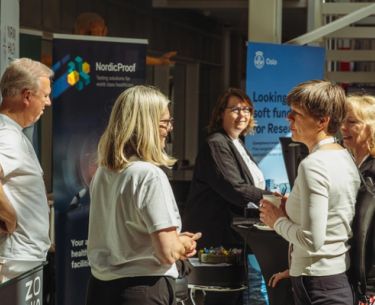
How can technology contribute to better elderly care – and what does it take to move solutions from pilot to practice? That was the topic when more than 50 members joined Norway Health Tech’s digital lunch with CEO Lena Nymo Helli. The engagement was high – and the message clear: technology must be part of the solution, but also part of the system.


Written by
Therese Oppegaard
Participants agreed that technology can increase safety, efficiency, and quality of life – but only if solutions are actually adopted, integrated into services, and followed up over time.
Several emphasised that implementation must be part of the procurement process. Without proper training and anchoring, many solutions remain unused.
“Customers must demand that onboarding and implementation are included in the order – only then can we document impact,” said Roald Kvam from Motitech.
Motitech has demonstrated how proper implementation of Motiview reduces falls and promotes social engagement among the elderly – with significant human and economic benefits. Similar experiences were shared by VitalThings and DignaCare, both of which have documented effects but depend on municipalities following up and adapting workflows.
“Elderly care doesn’t need more technology to start with – it needs the right technology, at the right time,” said Linda Cecilie Grøndal-Eeles from Tellu.
The barriers lie in the system – not in the technology
The discussion revealed broad agreement that the challenge is not the technology itself, but how we organise, finance, and govern services.
Current budgets and performance targets offer few incentives for collaboration between hospitals, GPs, and municipalities. Many called for a national co-financing or innovation fund, so investments in technology don’t stop simply because the benefits occur elsewhere in the system.
Several participants also pointed to the need for common standards, a shared terminology, and a quality label for health technology to simplify procurement and build trust across municipal borders.
“We need a national approval scheme to streamline processes and ensure trust across municipalities,” one participant summarised.
There was a shared view that Norway now needs a coordinated national effort on technology in elderly care, with clearer state responsibility for both direction and funding.
Key takeaways
Among the key proposals discussed were:
• A national quality and approval scheme for health technology
• A requirement for implementation and training in all procurements
• A collaboration fund supporting projects between hospitals and municipalities
• A national competence programme for municipalities in cooperation with KS and innovation clusters
• Incentives for scaling and benefit-sharing between suppliers and public actors
The insights from the meeting will now inform Norway Health Tech’s dialogue with policymakers, funding agencies, and partners.
“To succeed with sustainable elderly care, we must stop viewing technology as an add-on – and start seeing it as an integrated part of the service,” concluded Lena Nymo Helli.