- News article
Government–Industry Dialogue on AI in Health


How can Norway adopt artificial intelligence in the health services – faster, safer, and at greater scale? This was the central question when Minister of Health and Care Services Jan Christian Vestre and Minister of Digitalisation and Public Governance Karianne Tung met with health-sector representatives and industry at a political input meeting hosted by Norway Health Tech and Digital Norway.


Written by
Therese Oppegaard
📸 Ministry of Health and Care Services
AI must be adopted in a safe and effective way
Tung and Vestre opened the meeting with a clear message: Artificial intelligence is no longer a future scenario – it is a necessary tool to relieve health personnel, improve patient care, and ensure sustainability in a pressured health service. They also emphasized that this requires closer and more predictable collaboration between the health sector and industry.
New technology can simplify the workday, reduce the documentation burden, and improve quality for patients.
“We expect the health sector to adopt AI in a safe and effective way,” Tung said. She added that a modern and sustainable health service requires active involvement from industry, and that the health sector must be a reliable partner for innovation environments.
Vestre highlighted the government's ambition to allocate more of the regional health authorities’ annual NOK 3 billion for ICT and medical technical equipment to time-saving technologies starting next year. Speech-to-text solutions are among the first areas set to be scaled nationally. He also emphasized that achieving health-policy goals requires closer cooperation between industry and the health service – and that hospitals must increasingly adopt existing proven solutions from the market.
Norwegian workforce is embracing AI at high speed – with health at the forefront
New numbers from Microsoft show that Norway is now the third-highest country in the world for workplace AI adoption – 45 percent of Norwegian employees use AI in their daily work. The health sector is highlighted in particular as an area where Norway is strong, and where the pace of adoption is expected to accelerate further in the coming years.
The ministers stressed that efforts to strengthen the domestic market and facilitate export are essential to realising this potential. The 2025 mandate letters to the regional health authorities therefore introduce a new main objective: knowledge-based and sustainable services through research, innovation, and collaboration with industry. The government expects hospitals to be aware of – and adopt – good solutions already available in the market, especially when this is more efficient than developing new alternatives internally.
Hospitals therefore have a clear role as test and piloting arenas, development partners, and market actors in the health industry. This will help Norwegian companies build a strong domestic market – a crucial foundation for export.
The government also highlighted the National Health Technology Scheme as an important instrument for creating stable framework conditions for both purchasers and suppliers of health technology. This year, the scheme has been expanded with a consolidated overview of national requirements for health technology – and which suppliers meet these requirements. This increases predictability in the market and makes it easier for public actors to adopt safe and quality-assured solutions.
Shared challenges – and clear proposals for change
Suppliers presented their solutions and provided the government with concrete input on what is needed to enable safe and effective scaling of AI in the health services. The input reveals a clear pattern:
Industry representatives collectively pointed to the procurement system as the largest barrier to the practical adoption of AI. Current processes are described as heavy, fragmented, and poorly suited to rapidly evolving technology. As a result, solutions that could provide significant benefits to the health service often stall before implementation – and several Norwegian companies see no choice but to turn to foreign markets to scale.
Suppliers called for clearer mandates, budgets, and opportunities for the health trusts to adopt AI, as well as better access to health data and a national health data strategy. They also emphasized that the market must be managed in a way that allows new actors to compete, and that large actors must not define frameworks that effectively shut out smaller companies. A strong and predictable domestic market was highlighted as a prerequisite for export – Norwegian solutions must be adopted at home before they can grow internationally.
In addition, suppliers called for equal regulatory assessments regardless of company size, as well as financial incentives for implementation, data sharing, and scaling.


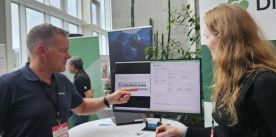
Norway Health Tech moderated the session with the suppliers.
📸Ministry of Health and Care Services
From ambition to adoption
Towards the end of the meeting, both ministers emphasized that they will take the input with them into the development of national plans, mandate letters, and digitalisation policy.
Vestre highlighted three recurring themes he took from the suppliers: clear goals, resources that match the level of ambition, and systematic measurement of effect.
“Watch the mandate letters to the hospitals in January,” he said, also promising to bring the input into dialogue with the Minister of Local Government. He stressed that competence in public procurement is a key factor for success.
Tung emphasized that municipalities show a strong willingness to change and collaborate, and that Norway must build a culture that tolerates testing and failure. She reiterated the ambition for Norway to become the world’s most digitalised country:
“We must succeed – now we need to move from ambition to adoption.”