- Success story
From plastic mannequins to artificial intelligence

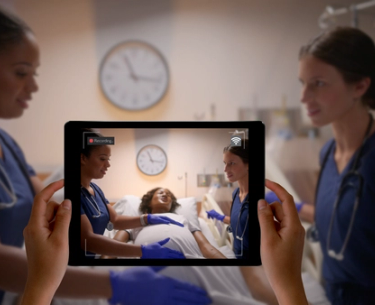
For more than 80 years, Laerdal Medical has developed solutions that have helped save millions of lives. Now, the company is entering a new era – where data and artificial intelligence, combined with physical simulators, are at the core of future learning and patient safety.


Written by
Therese Oppegaard
When Laerdal Medical launched Resusci Anne in the 1960s, it revolutionized cardiopulmonary resuscitation (CPR) training. For the first time, healthcare professionals and volunteer organizations could systematically practice life-saving techniques – helping make CPR a global method for saving lives. The mannequin quickly became an international icon, used by millions of people in more than 120 countries.
This success made Laerdal a pioneer in medical simulation and established the Stavanger-based company as a global player. From its early days as a small Norwegian toy manufacturer, Laerdal rapidly evolved into an international provider of life-saving equipment and training solutions.
But where plastic once were the very symbol of innovation, today it primarily serves as a vehicle for advanced technology.
– Today, we see physical training mannequins as a channel to achieve something greater: improved learning outcomes, more precise skills development, and ultimately, more lives saved, says Inger Johanne Stenberg, Head of Media Relations and Public Affairs at Laerdal.

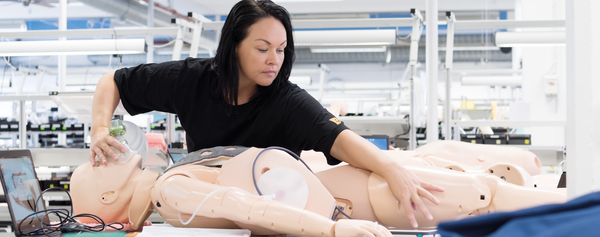
Laerdal Medical operates its own factory at Forus in Stavanger, where smart training mannequins are produced on a large scale. Photo: Laerdal Medical
Technology set in a system
While many still associate Laerdal with classic medical equipment, the company is now repositioning itself as a world-class technology company. AI, VR, and digital platforms have become just as central as the mannequins that started it all. But where many tech companies focus on isolated products, Laerdal has always emphasized the bigger picture.
– Laerdal has an ambitious goal to help save one million more lives every year by 2030. To reach that goal, it’s crucial that we work strategically with key partners — both within healthcare education and among professional practitioners, explains Michael Sautter, Chief Learning Officer at Laerdal and board member of Norway Health Tech.
He adds that training needs vary greatly depending on context — and that this is fundamental to Laerdal’s holistic approach.
– Our solutions — whether physical, digital, or AI-based — are not designed as ‘one size fits all.’ Training a young student to become a confident healthcare worker requires a very different approach from developing the skills of experienced professionals working in complex teams. Our ecosystem of products and digital solutions is therefore designed to support healthcare personnel throughout their entire career — from their first day as a student to senior roles in practice, says Sautter.
A recent example of Laerdal’s technological evolution is a new project with Norway’s Emergency Medical Communication Centre (AMK), which manages the 113 emergency number. Today, operators must juggle multiple tasks simultaneously — connecting via video, assessing the situation, asking questions, determining urgency, providing first aid guidance, and documenting the call in real time.
With Laerdal’s new AI-assisted solution, operators receive support from an intelligent system that analyzes video snapshots, suggests relevant questions, assists in triage assessment, and automatically drafts documentation as the call unfolds.
– The solution is designed to let the operator focus on what matters most — the person at the other end of the line. This project, now entering a new phase, demonstrates how AI can empower people rather than replace human contact, says Tonje Søraas Birkenes, Senior Researcher at Laerdal.

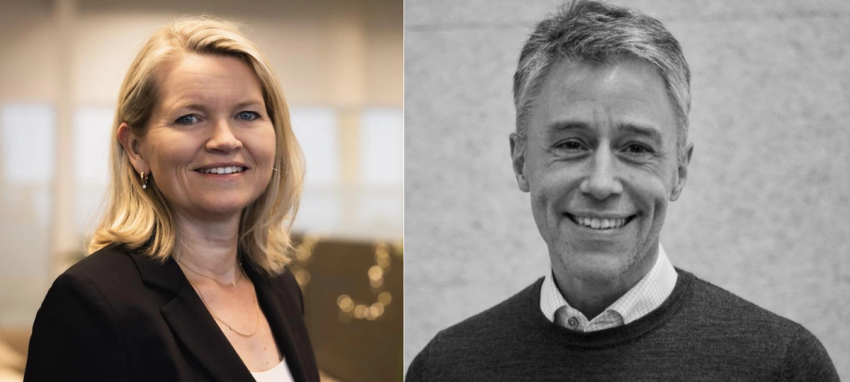
Tonje Søraas Birkenes og Michael Sautter, Laerdal Medical
When Technology Must Work – No Matter What
For Laerdal, innovation is not just about developing new technology, but about creating solutions that function under any conditions – even when modern infrastructure fails. The technology must be robust, simple, and accessible, and usable even where internet connectivity cannot be taken for granted. With its own production capacity, the company can test solutions on a large scale and adapt them both to advanced hospitals and to healthcare services in low-resource settings. This philosophy aligns closely with the work of Laerdal’s not-for-profit arm, Laerdal Global Health, which primarily operates in environments with limited digital infrastructure – but where the potential to save lives is all the greater.
This mindset also resonates with the growing national focus on preparedness. Norway’s National Health Preparedness Plan emphasizes that the health and care sector must safeguard critical resources such as ICT systems and medical equipment when crises occur. At the same time, the National Security Plan for Digital Infrastructure warns against vulnerabilities in networks and power supply, highlighting the need for more resilient systems capable of withstanding both fiber and power outages. A new Health Preparedness Act is also underway – one that elevates ICT infrastructure in the health and care sector as a matter of national priority and an integral part of overall health preparedness.
At Laerdal, digital resilience is not an add-on but a prerequisite for design and production. The company exemplifies how technological innovation and societal preparedness can go hand in hand – a model for the kind of industrial capacity Norway will need more of in the years ahead.
Partnerships as a Driving Force
Partnership has always been part of Laerdal’s DNA. As early as the 1950s, the company entered into a groundbreaking collaboration with Professor Peter Safar – known as the “father of modern resuscitation” – which led to the development of Resusci Anne. This marked the beginning of a tradition where Laerdal has never stood alone, but has always sought knowledge and ideas through close collaboration with others.
Today, that legacy continues through strategic and commercial partnerships with hospitals, researchers, educational institutions, and technology companies around the world. For Laerdal, it’s not just about delivering products, but about being part of a larger ecosystem for innovation and patient safety.
– Our experience is that even the best products will fail if they’re not developed in collaboration with those closest to the problem being solved. It’s usually when a product or solution is put into use by people within a complex organization that success or failure is determined, says Sautter.
That’s why Laerdal has chosen partnership as the recipe for success along the entire value chain — from early research and development to successful implementation in universities, hospitals, or ambulance services.
– Through partnerships, the potential for success and meaningful results increases dramatically, he adds.
Much of the research conducted under Laerdal’s direction has been translated into new solutions — from maternal care to emergency medicine — that have helped save lives in both high- and low-resource settings. This ability to connect research environments, healthcare professionals, and technology partners enables the company to continuously develop solutions that address real-world needs — not just those imagined on the drawing board.

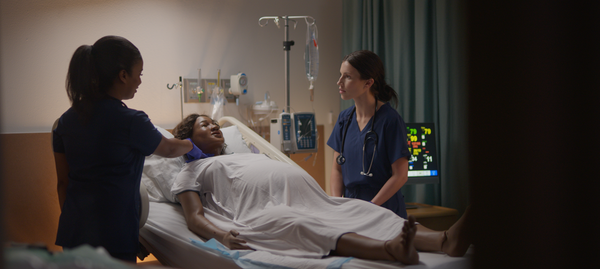
MamaAnne, a maternal and birthing simulator for high-fidelity training in managing critical obstetric emergencies. Photo: Laerdal Medical
Looking Ahead
With the goal of helping save one million more lives every year by 2030, Laerdal is now investing heavily in digital solutions, data-driven learning, and artificial intelligence. The shift from plastic to AI is not about leaving its legacy behind – but about using it as a springboard into a new era. With operations in nearly 30 countries and solutions used across continents, Laerdal is already a global player – and its experience provides a strong foundation for discussing how Norway can build a health industry with true international weight.
According to the World Health Organization (WHO), access to quality healthcare is a human right. In almost every country in the world, health is considered among the top three to five priorities that a nation must provide for its citizens.
– If we want Norway to have a strong health industry with Norwegian ownership and an international reach, we must leverage our competitive advantages by supporting both research and early-stage business development – while also ensuring that entrepreneurs and owners have the right framework and conditions to expand and grow. Over the years, Norway has built an international reputation as a small country with a big humanitarian heart. That should serve as a unique springboard for building a health industry that meets open doors internationally, concludes Sautter.
Take a look at the website if you’d like to get to know Laerdal Medical better