- News article
The health reform must accelerate digitalisation

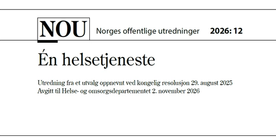
How can a new health reform strengthen our ability to implement change and shorten the path from pilot to scale? This was one of the key questions when Norway Health Tech brought together senior leaders from the health service, government and industry for the National Executive Forum on 26 November. The discussions will feed into the cluster’s consultation response to the Health Reform Committee’s Official Norwegian Report (NOU).


Written by
Therese Oppegaard
Three weeks after the Health Reform Committee presented its recommendations, the reform was the starting point for this autumn’s National Executive Forum at Oslo Science Park. State Secretary Ellen Rønning-Arnesen at the Ministry of Health and Care Services made it clear that the government needs concrete input for the next stage of the reform process.
– The Committee’s report is not the reform, Rønning-Arnesen said in her opening remarks.
On digitalisation and collaboration with the health industry, she signalled greater ambitions than those set out in the Committee’s report. Too many layers of decision-making, unclear incentives and disagreements over who bears the cost and who reaps the benefits mean that good solutions are not scaled quickly enough.
– Too many actors feel they need to have a say whenever a decision is made. This makes the path from start to finish far too long, she said.
At the same time, she warned against responding by creating new public-sector structures that could become “bottlenecks in the system”. Quoting Minister of Health Jan Christian Vestre, she said:
– We must NOT, NOT, NOT build new public-sector structures that become a bottleneck in the system. She encouraged participants to be specific about where the obstacles are, which framework conditions need to change and how the path from solution to implementation can be shortened.
– Tell us straight. Be clear!
We can’t organise our way out of workforce shortage
Wenche Dehli, sekretariatsleder for Helsereformutvalget, gikk gjennom hovedtrekkene i rapporten og pekte på behovet for større gjennomføringskraft, særlig i kommunene. Offentlig sektor skal ikke utvikle løsningene selv, understreket hun, men bli en mer profesjonell kunde av leverandørmarkedet.
I debatten etterpå handlet det mest om hvor helsetjenesten trenger sterkere nasjonal styring.
Thomas Smedsrud fra Kernel advarte mot å møte manglende fremdrift med mer sentral styring. Han ville heller gi dem som leder helsetjenestene et tydeligere ansvar også for teknologien. Bjørg Torill Madsen fra Lillestrøm kommune argumenterte for sterkere nasjonal styring av blant annet standarder, datadeling og juridiske avklaringer. Men hun advarte mot å tro at organisering i seg selv løser den største utfordringen.
– Vi kan ikke organisere oss ut av arbeidskraftutfordringen. Vi må endre selve måten vi leverer tjenestene på.
Hun trakk et tydelig skille mellom å digitalisere dagens tjenester og å bruke teknologien til å endre dem:
– Hvis digitaliseringen bare setter strøm på dagens arbeidsprosesser, har vi digitalisert, men vi har ikke transformert.
Rønning-Arnesen var på sin side skeptisk til for stor frivillighet når nasjonale løsninger først er besluttet. Retning, ansvar og standarder må være tydelige, samtidig som antallet beslutningsledd må ned.
– Vi må bli enige om hvor mye forankring vi skal drive med før vi tar en beslutning.
Wenche Dehli, Secretary to the Health Reform Committee, outlined the main recommendations in the report and highlighted the need for greater capacity to implement change, particularly in the municipalities. She stressed that the public sector should not develop the solutions itself, but become a more professional customer in the supplier market.
The debate that followed focused largely on where stronger national governance is needed in the health service. Thomas Smedsrud from Kernel warned against responding to slow progress with more centralised control. Instead, he argued that those who lead health services should also take greater responsibility for the technology. Bjørg Torill Madsen from Lillestrøm municipality called for stronger national governance in areas such as standards, data sharing and legal frameworks. But she cautioned against assuming that organisational change alone can solve the biggest challenge.
– We can’t organise our way out of the workforce challenge. We have to change the way we actually deliver health services, said Madsen.
She drew a clear distinction between digitalising today’s services and using technology to transform them.
– If digitalisation simply puts today’s processes on a digital platform, we have digitalised, but we haven’t transformed.
Rønning-Arnesen was concerned about relying too heavily on voluntary adoption once national solutions have been agreed. There needs to be a clear direction, clear responsibilities and common standards, while reducing the number of decision-making layers.
– We need to agree on how much stakeholder involvement we need before we actually make a decision.

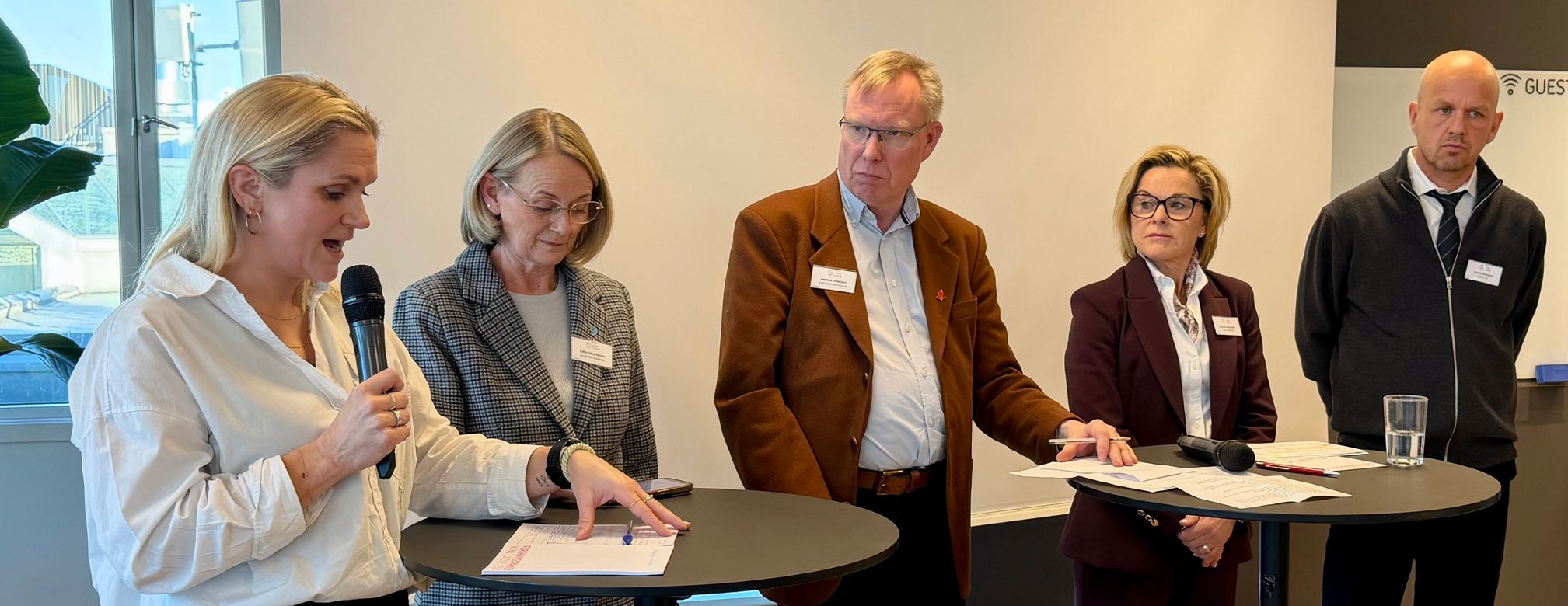
F.v: Ellen Rønning Arnesen (Statssekretær HOD), Bjørg Torill Madsen (Lillestrøm kommune), Andreas Stensvold (Sykehuset Østfold), Heidi Blengsli Aabel (Vitalthings), Thomas Smedsrud (Kernel).
Several members of the panel also pointed to financing as part of the problem. Andreas Stensvold from Østfold Hospital noted that more treatment is expected to take place closer to where people live, while current financing models do not necessarily support such a shift.
– We need a financing model that makes it possible to provide treatment at the lowest appropriate level of care, Stensvold argued.
From an industry perspective, Heidi Blengsli Aabel from Vitalthings argued that technology should be treated as an investment in future productivity, not simply as a cost where the investment is made. She also called for a clearer path from testing to procurement and scaling. Too many pilots are launched without a plan for what happens if they succeed.
Director of Health Cathrine Lofthus addressed several of the same issues in her remarks. Above all, she called for digitalisation to play a more prominent role in the reform itself.
– Digitalisation is still treated somewhat as a separate topic, alongside service development, rather than as an integral part of how future health and care services should be developed and delivered, Lofthus said.
She also highlighted the potential of digital services to help people manage their own health. If more healthcare is to be provided closer to where people live, proximity is about more than geography. Lofthus called for greater use of evidence-based digital self-help and treatment tools, supported by models that enable them to be adopted at scale.
From discussion to concrete input for the NOU
A key part of the National Executive Forum is bringing together leaders from the public and private sectors to discuss shared challenges. This time, the focus was on what needs to change to strengthen the implementation of digital solutions across the health service, and on developing concrete proposals that Norway Health Tech can take forward.

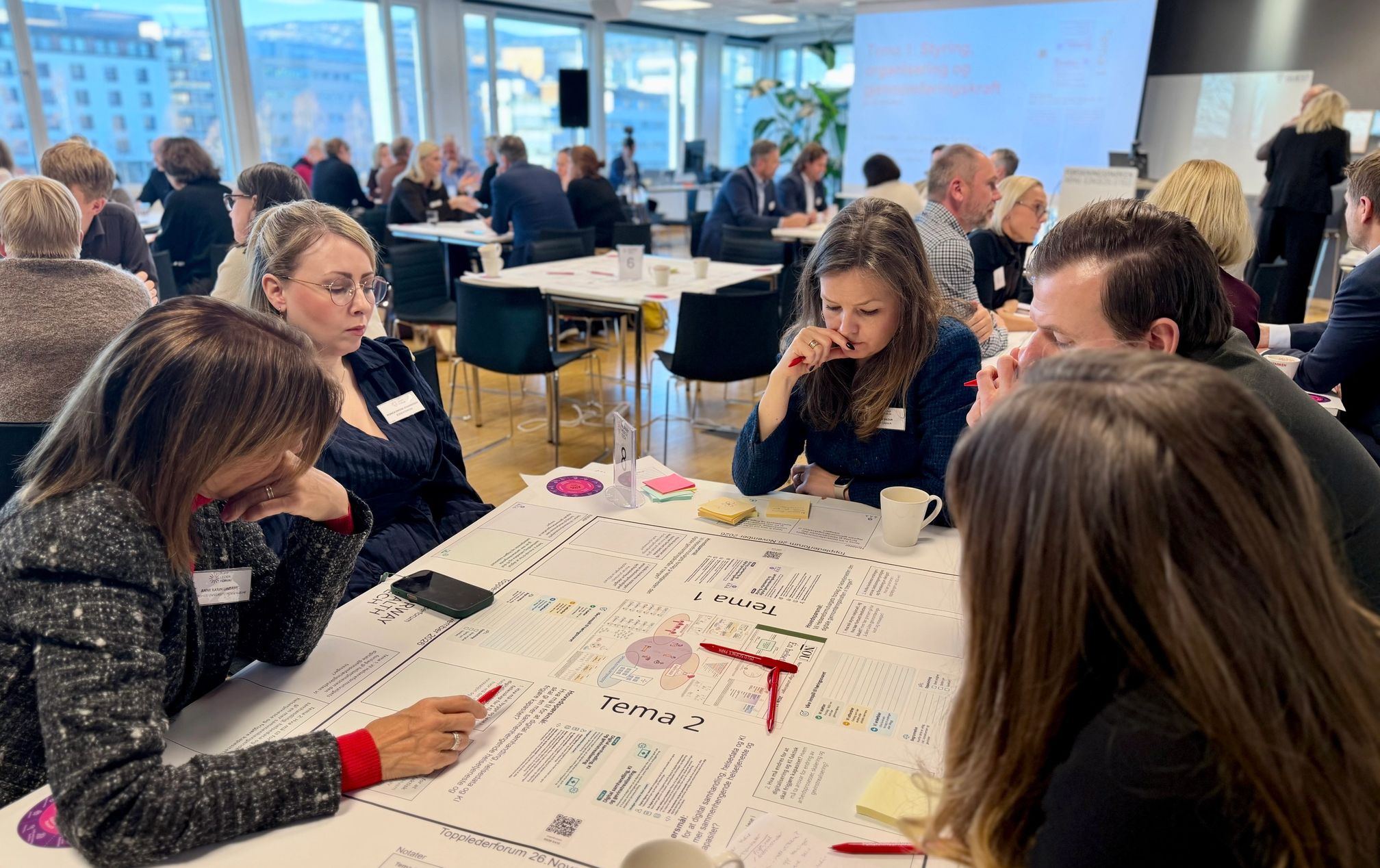
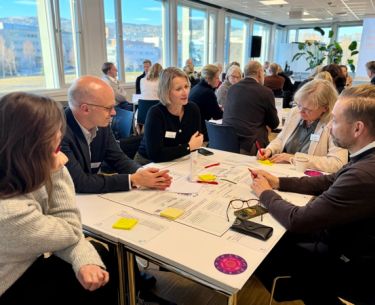
Engaged participants contributed actively to the workshop after lunch.
The input from the National Executive Forum will now feed into Norway Health Tech’s consultation response to the Health Reform Committee’s Official Norwegian Report (NOU).
The National Executive Forum is held twice a year, bringing together senior leaders from the health service, industry and the public sector. It is a forum for different perspectives, but also for turning discussion into concrete input that can be taken forward.
Do you have input on the Health Reform Committee’s proposals? Norway Health Tech members can contribute to the cluster’s consultation response through our digital form: