- Success story
- Functional testing and usability evaluation
Final test before market launch – healthcare professionals test the solution

When Ably Medical reached out to Smart Care Lab in early January, they needed to carry out a critical usability test of their product. Within weeks, the testing was completed in Stavanger – with the right target group and in settings closely resembling real clinical practice.


Written by
Therese Oppegaard
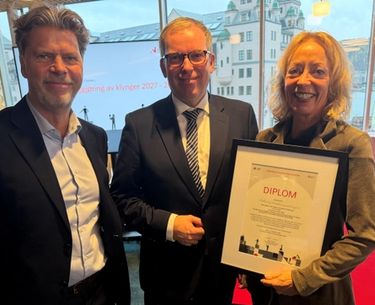
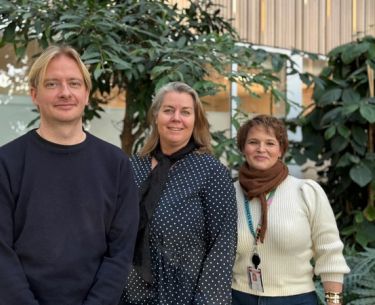
📸Jens Peter Heli, CTO in Ably Medical, Marit Hagland, Head of Smart Care Lab, og Line H. Thomsen, Head of HelseCampus Stavanger.
Ably Medical develops sensor technology that gives healthcare personnel better oversight of patients – particularly in situations where they cannot be present in every room at the same time. The EU Medical Device Regulation (MDR) sets strict requirements for safety, including how a medical device is actually used. Use errors are considered a real risk, and manufacturers must document that the solution can be used correctly and safely by the intended user group. This is why usability testing is a mandatory part of medical device development.
For Ably Medical, the summative usability test was a necessary part of the documentation required in the company’s regulatory pathway towards CE marking under the MDR. The test represents the final validation of the finished product. At this stage, the goal is no longer to refine or improve the solution, but to document that it performs as intended and that the risk of use errors has been identified and mitigated.
– It is particularly important to test so-called critical tasks – situations where incorrect use could have consequences for patients or healthcare personnel, says Marit Hagland, Head of Smart Care Lab.
Tested with the right target group – in realistic environments
For Ably Medical, this meant testing the system with representatives from the actual user group – nurses and other healthcare professionals with hands-on experience. Smart Care Lab recruited participants according to defined criteria and planned the execution of the test.
– In a summative test like this, it’s not enough to involve “a few users.” The regulations require a defined number of participants from the correct target group – in this case, nurses and healthcare professionals with practical experience. We were able to mobilize this quickly through our network, says Hagland.
The testing began with a review of the instructions for use – which is also part of the usability requirements. Participants read the manual while being observed. They then entered the simulation room, installed the system in a hospital bed, and carried out predefined tasks under structured observation. User behavior, hesitation, errors, and questions were systematically documented. Afterwards, participants answered questions about understanding, usability, and perceived safety.

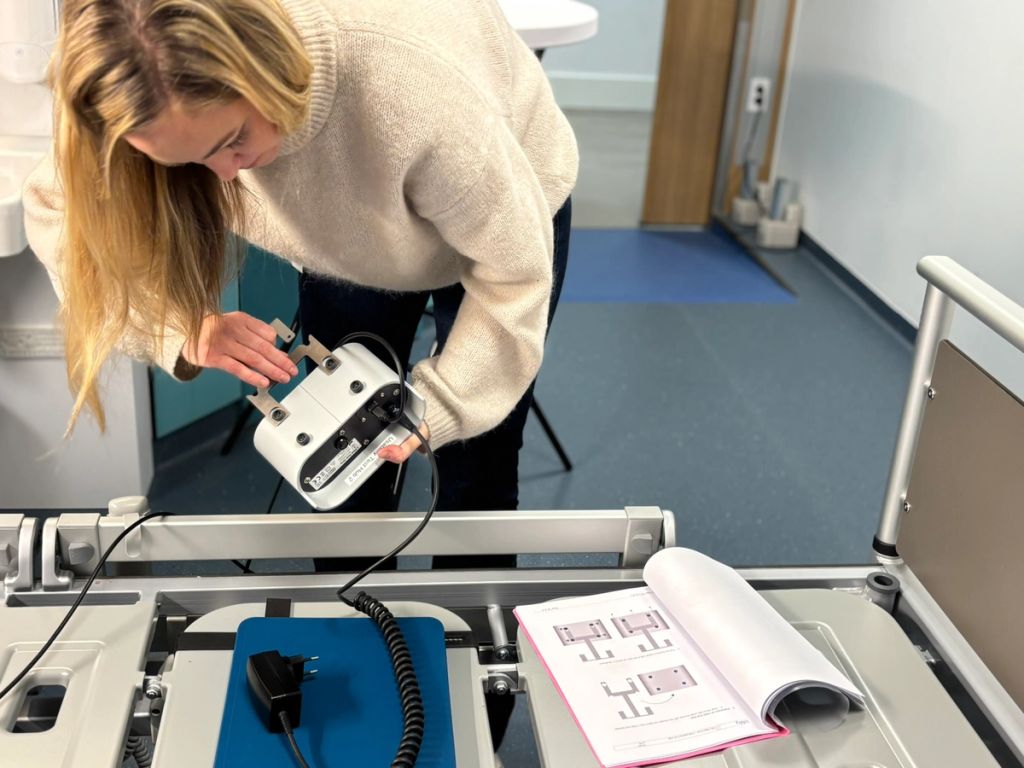
Tone O. Joakimsen was one of those who tested Ably Medical’s solution in Stavanger.
If such a test reveals critical issues, the design must be revised and the validation carried out again. This is precisely why strict requirements are placed on both execution and documentation.
– This is not a “user test” in the usual sense. It is a regulatory validation to ensure that the product can be used correctly and safely. If we identify serious deviations, the company must go back to the drawing board and conduct new testing. That is why both execution and documentation must be highly precise, Hagland adds.
Realism – without being in an active clinical setting
A key factor for Ably Medical was finding a location that was as close to real clinical practice as possible, without being part of an active care environment. The documentation needed to be highly credible, while the execution had to remain controlled and efficient.
The choice fell on Smart Care Lab and the facilities at HelseCampus in Stavanger.
HelseCampus Stavanger brings together the university, hospital, municipality, simulation centre, and health technology environments under one roof. It offers modern simulation rooms and test arenas that replicate real care and treatment scenarios – designed for training, testing, and innovation.
For companies navigating regulatory processes, this provides a clear advantage: products can be tested in environments that feel authentic to users, while maintaining full control over observation, documentation, and logistics. This strengthens the quality of the data forming part of the approval documentation.
– Here at HelseCampus, all the stakeholders needed to develop future healthcare services come together, says Line Hurup Thomsen, Head of HelseCampus Stavanger. – With strong partners, and a university and regional hospital as our closest neighbours, everything is in place for the centre to be actively used by both the public and private sectors.
Strong test infrastructure as a competitive advantage
For health technology companies, regulatory requirements are often among the biggest barriers to market entry. Access to the right test environment, a representative user group, and professional execution can be critical when building the necessary documentation. The testing conducted in Stavanger does not mean that the product is approved. However, without this type of documented user validation, a medical device cannot obtain CE marking in Europe.

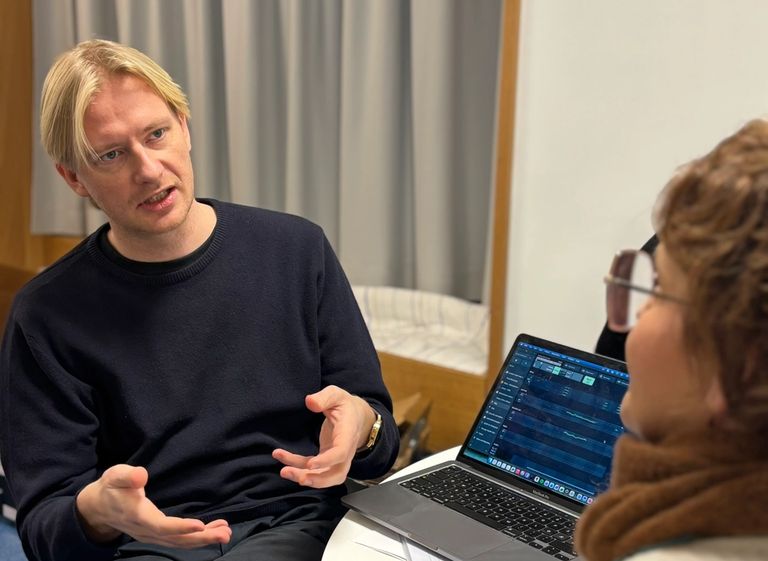
Jens Peter Heli, CTO i Ably Medical, explains to the test participants how the sensor works and what information it provides to healthcare services.
The collaboration between Ably Medical and Smart Care Lab demonstrates how high execution capacity and world-class test facilities in Stavanger can support companies navigating complex regulatory processes. For companies in MDR pathways, this means reduced risk, higher quality documentation, and a more predictable route to market.
– The collaboration with Smart Care Lab has been excellent. Clear communication, fast execution, and high-quality testing. The user group that was recruited had strong professional and demographic diversity, which provided us with highly valuable feedback, says Jens Peter Heli, CTO of Ably Medical.
– We will definitely use Smart Care Lab again.
For Ably Medical, an important milestone has now been reached – and the path forward towards CE marking and market launch is open.